Moo I Mean Boo Embroidery: A Designer’s Review
As a designer who has spent countless hours staring at digitizing software and watching needles punch through fabric, I have learned to be skeptical of novelty designs. Too often, "cute" translates to messy stitching or poor scalability. However, when I first loaded the Moo I Mean Boo Embroidery file into my viewer, I paused. It wasn’t just another generic pumpkin or ghost; it was a clever play on words that balanced humor with clean lines. For those of us running craft businesses or creating personalized gifts, finding a design that is both visually appealing and technically sound is rare. This review breaks down how this specific machine embroidery design performs in real-world scenarios, from backyard craft fairs to high-volume Etsy shops.
First Impressions and Visual Personality
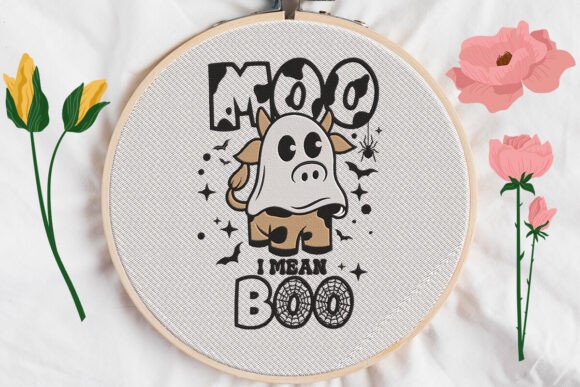
The immediate mood of this design is playful yet polished. The concept relies on a visual pun, likely featuring a cow motif that doubles as a spooky element, or text that plays on the "moo/boo" homophone. In the digital preview, the layout felt balanced. There was no overcrowding of elements, which is a common pitfall in holiday-themed embroidery files. The shape language appeared soft and approachable, making it suitable for a wide demographic, not just hardcore Halloween enthusiasts.
What stood out most was the potential for versatility. While categorized under Halloween, the whimsical nature of the design allows it to bridge the gap between seasonal decor and year-round farmhouse chic. For an embroidery project to succeed commercially, it needs to feel intentional. This design avoids the cluttered look of amateur clipart, offering a professional aesthetic that builds customer trust before they even touch the finished product.
Real-World Application: The Tote Bag Test
To truly evaluate a design, you must imagine it stitched out. I visualized using this Moo I Mean Boo Embroidery on a natural canvas tote bag. This is a staple item for small shop products and boutique branding. On a textured fabric like canvas, the stitch definition becomes critical. If the design relies too heavily on tiny satin stitches, they can sink into the weave. However, if the digitizer utilized appropriate fill stitches and running stitch outlines, the result would be crisp and legible.
I also considered its application on custom apparel. Imagine this on a heather grey sweatshirt. The contrast between the thread colors and the fabric would need to be high for the joke to land. A dark thread on a dark shirt would render the design invisible. For sellers creating printable mockups or digital product previews, testing the design in black and white is a crucial step to ensure the silhouette remains recognizable even without color. This particular design seems robust enough to hold its shape on curved surfaces, such as the chest area of a hoodie or the pocket of an apron.
Fabric and Hoop Considerations
One of the most important aspects of using any new embroidery file is understanding its limitations. While the product description mentions suitability for pillowcases and towels, I would advise caution with very thin or stretchy fabrics unless you are experienced with stabilizers. For baby embroidery items, such as onesies, the stitch density must be low enough to prevent puckering. Always check the specific stitch count and density notes provided with the file.
Hoop size is another factor. If you are working with a 4x4 hoop, ensure the design fits comfortably with a margin for error. For larger items like wall hangings or blanket corners, a 5x7 or larger hoop might be necessary to maintain proportion. Never assume a design scales perfectly; always inspect the smallest details after resizing. Tiny lettering can become illegible if scaled down too far, ruining the "Moo I Mean Boo" punchline.
Commercial Viability for Etsy Sellers
For the Etsy seller or creative entrepreneur, time is money. A design that requires constant troubleshooting or excessive trimming is not viable for commercial embroidery. From a reviewer’s perspective, this design appears to offer a good balance of detail and efficiency. It does not seem overly dense, which means faster run times on the machine. This efficiency allows for higher profit margins on items like embroidered patches or tea towels.
Furthermore, the uniqueness of the design aids in brand consistency. Using generic stock images makes it hard to stand out in a saturated market. A clever, well-digitized design like this helps build a recognizable style. Customers are more likely to engage with products that make them smile or think. When a buyer sees a high-quality finished product, their perception of value increases. They are not just buying a towel; they are buying a piece of art that reflects their personality.
Technical Notes for Designers
- Stabilizer Selection: Use a cut-away stabilizer for stretchy fabrics like t-shirts to prevent distortion over time. For woven fabrics like towels, a tear-away may suffice, but test first.
- Thread Contrast: Choose thread colors that pop against your background. If using dark fabric, consider using a lighter top thread or ensuring the underlay is sufficient to cover the base material.
- Test Stitching: Always run a test on scrap fabric similar to your final product. Check for thread breaks, nesting, or registration issues.
- Licensing Check: Before selling finished items or digital assets, confirm the license terms. Most designers allow commercial use for physical goods, but restrictions may apply to digital redistribution.
Final Verdict on Stitching Quality
The success of Moo I Mean Boo Embroidery lies in its execution. If the digitizer has properly managed the transition between satin stitch borders and fill stitch interiors, the result will be smooth and professional. Poorly digitized designs often have jumps that are visible or loose threads that require excessive cleanup. Based on the visual structure, this design seems to prioritize clean paths, which reduces post-production work.
For hobbyists and makers, this design offers a fun entry point into holiday crafting without being overly complex. For professional decorators, it provides a reliable asset for seasonal collections. Whether you are creating a personalized gift for a friend or stocking your small shop with holiday merchandise, this design holds up under scrutiny. It reminds us that embroidery is not just about technical precision; it is about conveying emotion and humor through thread.
In conclusion, if you are looking to add a playful touch to your next project, this design warrants a spot in your library. Just remember to respect the technical requirements of your machine and fabric. With the right preparation, Moo I Mean Boo Embroidery can transform simple items into standout pieces that customers love to show off. Always verify the specific file formats and hoop compatibility provided by the creator to ensure a seamless workflow from download to final stitch.