Review: Hamsa Hand Redwork for Craft Fairs
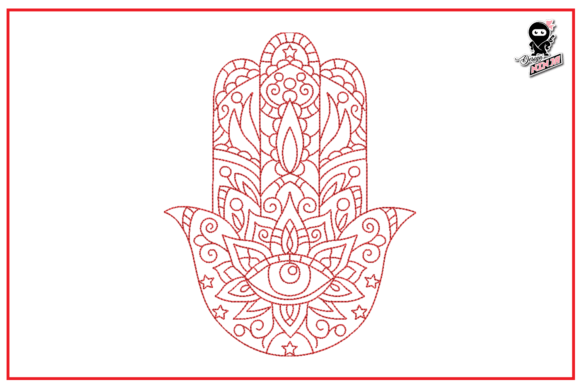
As an embroidery designer who has spent countless weekends standing behind booth tables, I know that the difference between a browser and a buyer often comes down to visual impact. When I first loaded the Hamsa Hand Redwork Embroidery file into my software, my immediate thought was about clarity. In the bustling environment of a handmade market, customers scan tables quickly. They need to understand what they are looking at from three feet away. This design, rooted in the protective symbolism of the Hamsa but executed in the clean, linear style of redwork, offers a striking balance between traditional meaning and modern minimalism.
First Impressions and Visual Appeal
The term "redwork" historically refers to embroidery done with red thread on white or natural fabric, but today it implies any single-color outline style. This machine embroidery design leverages that aesthetic beautifully. It feels less like the intricate, dense filling of a Zentangle pattern and more like a bold graphic statement. For a craft fair seller, this is crucial. Dense designs can sometimes look muddy from a distance, but line work pops. The Hamsa Hand Redwork Embroidery reads as elegant yet rustic, fitting seamlessly into farmhouse, boho, or modern minimalist booth themes.
When evaluating this for a craft fair product lineup, I look for versatility. Does it feel premium? Yes, because the simplicity suggests confidence in the stitch quality. Does it feel cute? Absolutely, especially when scaled down for smaller items. The lack of complex shading means the focus remains entirely on the shape and the symmetry of the hand, making it instantly recognizable even to those unfamiliar with the symbol’s deeper cultural roots.
Product Applications for Maximum Sales
To truly test the viability of this digital embroidery file, I mentally placed it on various blanks that typically sell well at weekend markets. Here is how it performs across different categories:
- Tote Bags: This is arguably the strongest application. A large-scale version of the Hamsa Hand Redwork Embroidery centered on a natural cotton canvas tote creates an instant bestseller. It serves as a tote bag design that is both functional and artistic. Customers love bags that make a statement without being overly loud.
- Tea Towels and Aprons: For kitchen textiles, the redwork style shines. On a white waffle-weave towel, a single red or deep blue Hamsa looks classic and timeless. As an apron embroidery element, placing it on the bib or the pocket adds a touch of protection and charm that resonates with home cooks.
- Embroidered Patches: If you offer custom patches, this design is ideal. The closed paths and clear outlines make it easy to cut and apply. An embroidered patch featuring this motif can be ironed onto denim jackets or backpacks, appealing to a younger demographic at your booth.
- Caps and Hats: Here, caution is needed. While the design is beautiful, the curved surface of a cap can distort wide designs. I recommend using a smaller version or ensuring the digitizing accounts for the curvature. It works best as a side accent rather than a full-front focal point on structured caps.
Production Practicality for Small Shop Owners
For the Etsy seller or the boutique maker, time is money. One of the biggest advantages of this Embroidery design is its potential for batch production. Because it lacks dense fill stitches, it likely runs faster than complex pictorial designs. This means you can hoop, stitch, and finish more units in less time. However, you must verify the specific details in your embroidery file. Since the product description mentions high quality but does not specify exact stitch counts or formats, always check these technical specs before committing to a large run.
Photography is another critical factor. This design photographs exceptionally well for online listings. The high contrast between the thread and the fabric creates sharp images that look professional in printable mockup scenarios or real-life photos. For a small shop product, having clean, crisp listing images can significantly boost click-through rates.
Careful-Use Notes and Technical Considerations
While the design is robust, there are practical constraints to consider. First, watch your stitch density. If the digitizer has packed too many stitches into the outline, it may cause puckering on lightweight fabrics like voile or thin cotton. Always test on scrap fabric first. Second, consider thread colors. While red is traditional, this design works stunningly in navy, forest green, or even gold for a festive holiday vibe. However, avoid using thread that blends too closely with the fabric, or the detail will be lost.
Fabric texture matters. On highly textured towels, fine lines can get lost in the weave. Ensure your needle size matches the fabric to prevent skipped stitches. Additionally, if you are using this on dark fabric, remember that redwork traditionally relies on contrast. You may need to use a brighter thread color or add a subtle satin stitch border to make the design pop against black or navy backgrounds.
Enhancing Brand Consistency and Buyer Engagement
Using a consistent design motif like the Hamsa Hand Redwork Embroidery across your product line strengthens your brand identity. If a customer sees the same elegant hand on a pillow cover, a tote, and a pouch, they recognize your shop’s aesthetic. This consistency builds trust and perceived value. It transforms individual items into a cohesive collection, encouraging buyers to purchase multiple items as gifts.
From a commercial embroidery standpoint, ensure you have the correct license. Most digital designers offer different tiers of licensing. If you plan to sell finished products, confirm that your purchase includes commercial rights. This protects your business and respects the creator’s work. Once licensed, this design becomes a powerful asset in your library, ready to be adapted for seasonal promotions or custom orders.
Final Designer Recommendations
Before you launch this at your next fair, take these steps:
- Test on Multiple Fabrics: Stitch out samples on cotton, linen, and canvas to see how the tension holds up.
- Check Hoop Size Compatibility: Ensure the design fits your standard hoops without requiring excessive re-hooping, which slows down production.
- Use the Right Stabilizer: For lightweight fabrics, a cut-away stabilizer might provide better long-term durability than tear-away, preventing distortion after washing.
- Create Real Mockups: Don’t just rely on digital previews. Photograph the actual stitched item to show customers the true texture and quality of the finished product.
In conclusion, the Hamsa Hand Redwork Embroidery is a versatile, market-ready design that balances aesthetic appeal with production efficiency. It stands out in a crowded marketplace by offering clarity and symbolic depth. Whether you are decorating clothing, home decor, or gifts, this design brings creativity and professionalism to your handmade offerings. By paying attention to fabric choice, thread contrast, and licensing, you can turn this digital asset into a staple of your successful craft fair booth.